In rural, urban, and suburban areas, communities around the country are increasingly unlikely to take responsibility for new roads. Meaning that private roads maintained by HOA’s have become more and more common.
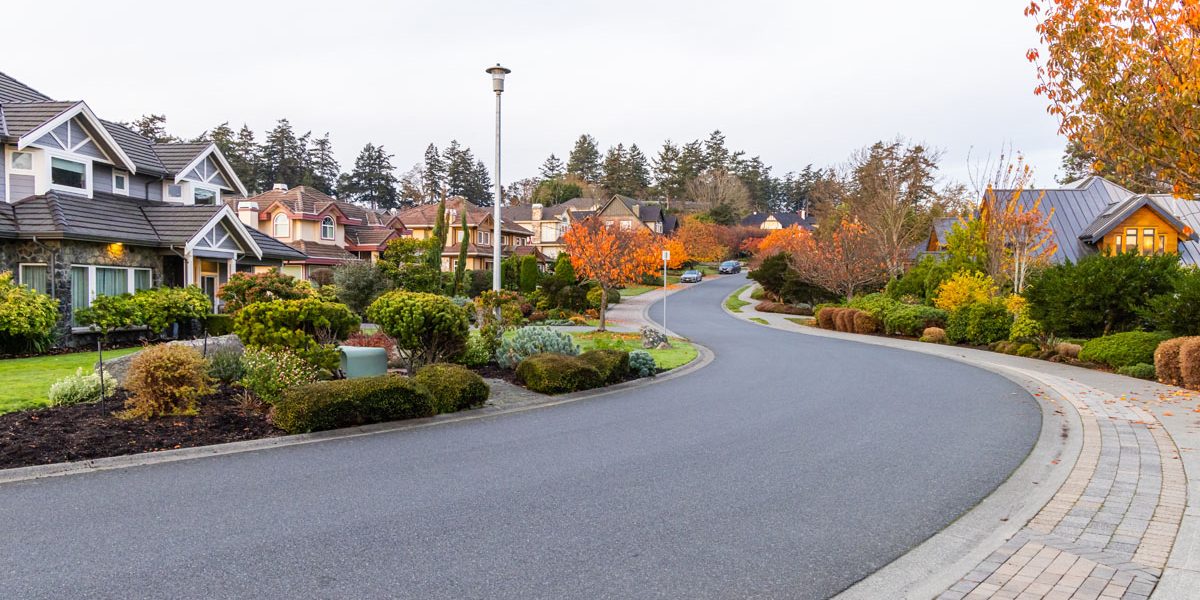
A lot of homeowners do not realize that they live on a private road since not every private road are “dirt roads.” Actually, most golf and condo neighborhoods, as do many gated communities, have magnificently landscaped and paved private roads.
Private road maintenance is best approached in a comprehensive way. That’s the reason private roads are usually not constructed to local DOT standards. The laws on private road construction are completely different — especially in areas in which development has energized residential building bursts.
The result is that private roads might require more frequent and extensive maintenance because of cost-cutting throughout the initial construction. This can make private road maintenance into a powder keg for the residents that requires them to drive on— and for the homeowner’s associations that are held accountable for maintaining them. It’s no surprise, then, that a Private Road Maintenance Agreement is a vital requirement for a lot of commercial mortgage lenders and government entities, comprising Fannie Mae HUD, FHA, USDA, VA, etc.
What Parts of Road Maintenance Are Covered?
Private roads are only the start. There is a lot more that an HOA paving company can provide. Sidewalks and parking areas are also going to need a maintenance plan —and each come with their own specific requirements, from sealing and paving to working with concrete or possibly landscaping hardscapes, such as street sweeping services for HOA communities. Therefore, common areas, like swimming pool decks or pickleball courts, require maintenance, also!
What Kinds of Services Might an HOA Road Maintenance Contract Comprise?
Once again, the range of services is required to be as comprehensive as the types of surfaces requiring upkeep. Asphalt maintenance entails sealing, patching, paving and re-construction, and after a while replacement. Concrete and cement work each requires its own set of materials and equipment to maintain sidewalks and general areas safe for people. Masonry and brickwork maintenance are also usually part of the equation.
How Is the Road Maintenance Agreement Funded?
Whether looking at roadways, sidewalks, or general areas, the matter of public safety is commonly an essential requirement of the HOA’s obligation to keep it all well-maintained. In the face of unexpected damage — often from natural forces like floods, severe storms, or winter freezes — remediation expenses can overpower any budget. That’s why a lot of HOA Private Road Maintenance Contracts have a reserve fund included. Newer projects can oftentimes be funded — at least somewhat— by government or agency grants.
The Importance of HOA Road Maintenance
There are a lot of reasons why private road maintenance contracts are important for communities. They can affect a property’s street appeal, which is linked to property values. Well-maintained, clean roads appear good and are safer. Potholes or pieces of missing pavement could damage residents’ vehicles, possibly leading to lawsuits, which nobody wants.
Sunstate Sweeping In Phoenix, AZ
Sunstate Sweeping is dedicated to providing exceptional quality of service to our clients. Sunstate Sweeping is committed to developing long-term customer partnerships and expanding our company with exceptional employees and state-of-the-art equipment that meet the individual needs of our clients.
Sunstate Sweeping believes in providing excellent training and empowering our employees. Teamwork, responsibility, and commitment to our clients are qualities we foster in all aspects of our business. Contact us to get scheduled today!